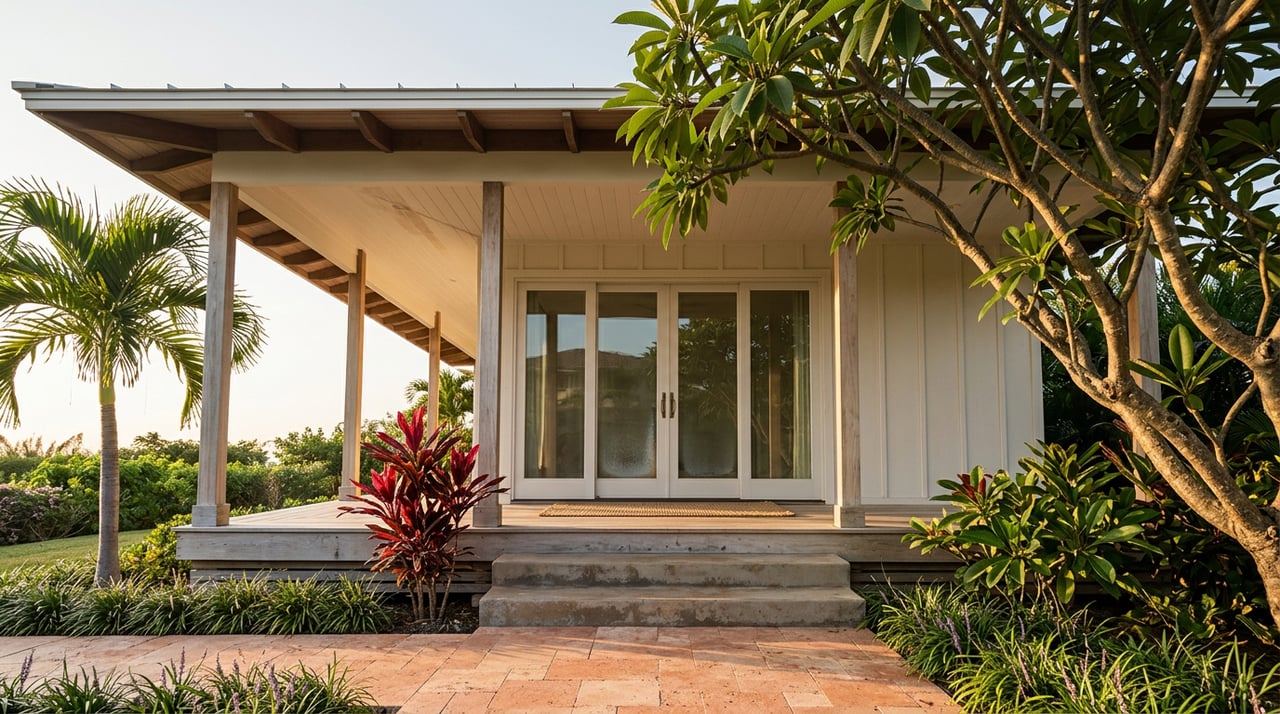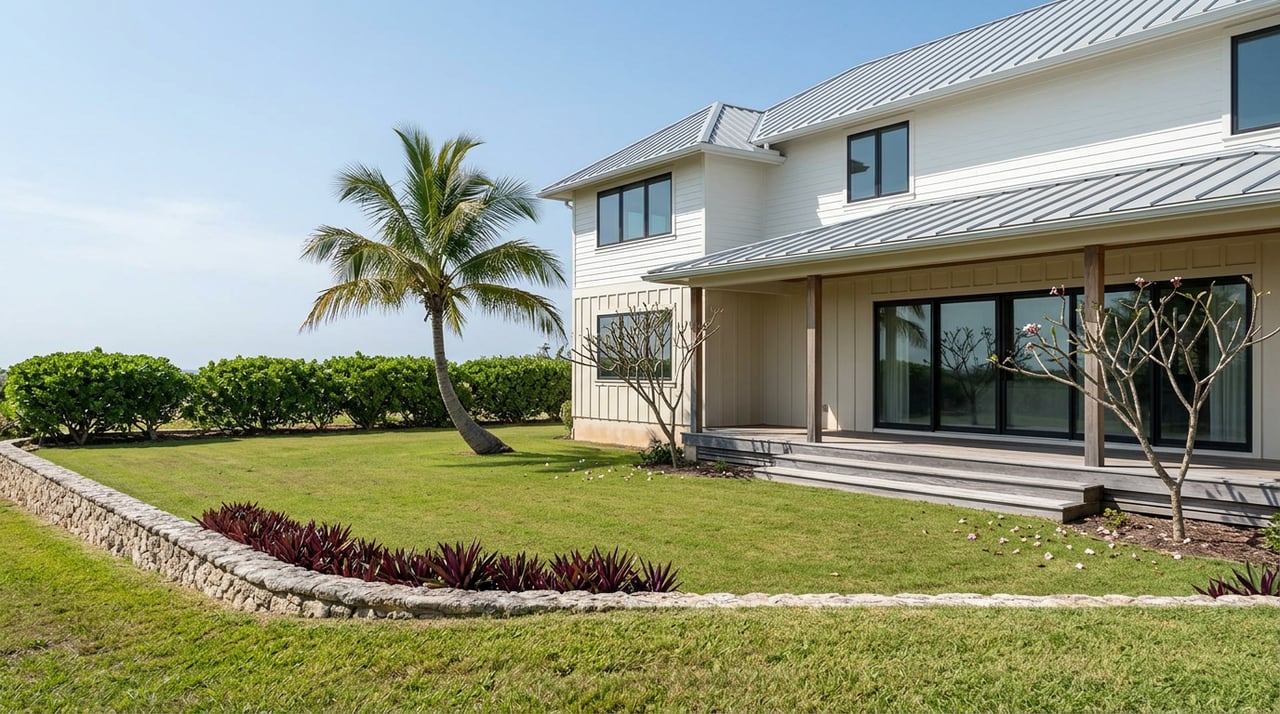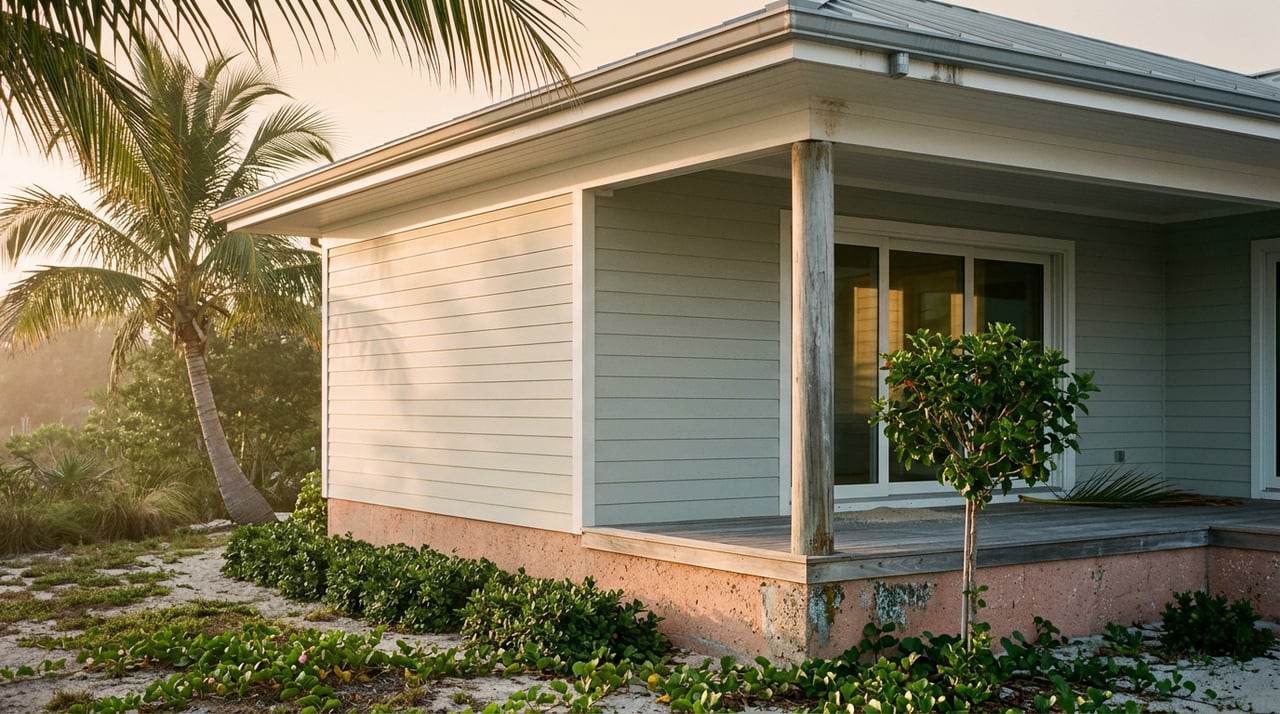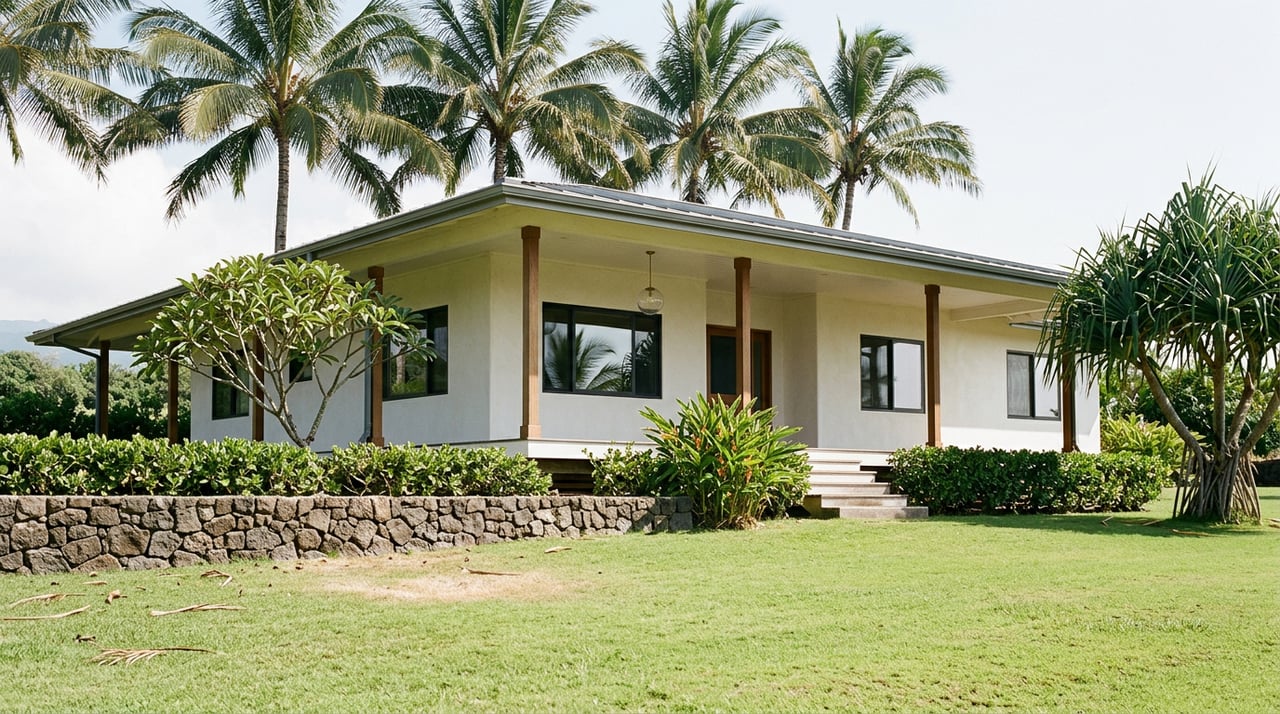
Two five-acre parcels sit inside the same North Shore agricultural community, both marketed under the same development name, both a short drive from Haleiwa town. One lets you build a farm dwelling and live on the land. The other, a few lots away, permits nothing but a shed. Same brand. Same brochure language about a legacy 1,400-acre master development. Opposite answers to the only question that actually determines what the land is worth.
This is the part of North Shore land shopping that rarely makes it into a listing photo: the word "farm" on an Oahu agricultural parcel does not describe one product. It describes at least three, and the difference between them is not acreage, ocean proximity, or price per square foot. It is a dwelling allocation, and it is decided long before any individual buyer shows up.
A Shared Brand Name Isn't a Shared Zoning Outcome
Large North Shore landowners have been subdividing agricultural holdings into individually deeded parcels through a structure called a condominium property regime, or CPR, for years. A CPR lets a landowner sell off smaller units of a big tract while the underlying land and shared infrastructure stay collectively owned. Roughly 2,724 acres of agriculturally zoned North Shore land had already been converted to CPR ownership as of a 2021 county land-use accounting, and that number has kept climbing as developments like Laukiha'a Farms, Waialua Farm, and Kawaihapai Farms 1 have brought new units to market.
The CPR structure explains why a marketing brochure can describe an entire 1,400-acre development in one breath. It does not mean every parcel inside that brochure carries the same building rights. The zoning classification, and more importantly the cluster math behind it, travels with the specific piece of ground, not with the development's name.
The Acreage Math That Decides Who Gets to Build
Here is the mechanism that actually separates a buildable five acres from a five acres that will only ever hold a shed. Under Honolulu's agricultural cluster rules, a farm dwelling in an AG-1 restricted agricultural district requires assembling a cluster of at least 15 acres, at a ratio of one dwelling per 5 acres. In an AG-2 general agricultural district, the bar drops to 6 acres, at one dwelling per 2 acres.
That threshold is calculated at the level of the assembled cluster, not the individual lot a buyer is looking at. A standalone 5-acre parcel inside a larger AG-1 development may or may not have already been bundled into a cluster application large enough to unlock a dwelling right. If it has, the listing will usually say so plainly, often using the exact phrase "farm dwelling" and specifying that the owner can live there. If it hasn't, the listing will typically state that only accessory agricultural structures are allowed and that no home or dwelling can be built, even though the acreage, the soil, and the surrounding scenery look identical to the parcel next door.
This is precisely the split visible across current Laukiha'a Farms inventory near Haleiwa. One of its listed parcels, fronting Helemano Stream, is marketed as AG-1 land limited to accessory agricultural structures only, with no home or dwelling permitted. Several other parcels in that same development, ranging from roughly 5 acres to over 11 acres, are marketed as carrying an approved farm dwelling right, meaning the buyer can build a home and live there. The brochure covers all of them. The dwelling allocation does not.
Important Agricultural Land Status Is a Cap, Not a Blank Check
A second layer sits on top of the cluster math: Important Agricultural Land designation, or IAL. This is a voluntary state program that landowners opt into to protect farmland long term in exchange for incentives, including a defined allowance for farm dwellings and employee housing. North Shore landowners have voluntarily designated roughly 9,807 acres as IAL, and in 2018 the county recommended an additional 13,500 acres for designation, a recommendation still awaiting a final decision from the State Land Use Commission.
The incentive that matters most to a buyer comparing parcels is this: the IAL program caps the portion of a designated area that can carry a dwelling at 5 percent of the total IAL acreage, or 50 acres, whichever is smaller, and any dwelling plan has to be backed by an agricultural plan the state Department of Agriculture signs off on. In practice, this means being located inside an IAL-designated development is not the same as your specific parcel having received one of the limited dwelling allocations that development is entitled to. A seller can accurately describe the land as IAL-designated and accurately describe it as having no dwelling rights in the same listing, because those are two separate facts governed by two separate limits.
Buildability Is the Price, Not the Acreage
Run the numbers side by side and the pattern becomes obvious. Waialua Farm, a 152-acre CPR built on land already carrying IAL designation, has listed roughly 5-acre agricultural estate parcels at $2,000,000 apiece. Those units are marketed as dwelling-eligible from the outset, a status baked into the CPR's original cluster approval rather than something a buyer has to secure later. Compare that to the no-dwelling parcels of similar acreage inside Laukiha'a Farms, which are being sold as raw AG land without that stamp, at a materially different price point for the same footprint of soil and the same North Shore address.
A few miles away, Kawaihapai Farms 1 adds a third variation. One active 2-acre unit there, listed in the spring of 2026, includes only an existing insulated trailer as its on-site agricultural structure, with no farm dwelling described at all. Separately, a nearby Anahulu Valley parcel carrying Kuleana status, a distinct historic native-tenant land designation that predates modern zoning subdivisions, is marketed as allowing a farm dwelling of up to 5,000 square feet with a second story, a dwelling allowance that a standard AG-1 subdivision lot of the same size would not automatically carry.
| Development | Approx. Acreage | Dwelling Status | What's Actually Included |
|---|---|---|---|
| Laukiha'a Farms (Helemano Stream parcel) | 5+ acres | No home or dwelling permitted | Accessory ag structures only |
| Laukiha'a Farms (other listed parcels) | 5 to 11+ acres | Farm dwelling permitted | Owner can build and live on site |
| Waialua Farm | 5 acres | Farm dwelling permitted, IAL-designated | Part of a 152-acre CPR, priced at $2,000,000 per parcel |
| Kawaihapai Farms 1 | 2 acres | No farm dwelling described | Existing insulated trailer as the on-site structure |
None of this shows up in an aerial photo. It shows up in the parcel's specific title documents and cluster history, which is exactly where a buyer needs to look before writing an offer.
Before You Write an Offer on North Shore Acreage
- Ask for the specific document that proves farm-dwelling cluster approval for the exact tax map key you are buying, not just the development's general marketing description
- Confirm how much acreage was assembled into that cluster and whether the ratio (one dwelling per 5 acres in AG-1, one per 2 acres in AG-2) has actually been met
- If the land is IAL-designated, ask whether your parcel is one of the ones allocated a dwelling right under the 5 percent or 50-acre cap, since designation and dwelling eligibility are decided separately
- Check the CPR declaration itself for any additional restrictions the individual unit carries beyond the base zoning
- Loop in a real estate attorney and a licensed surveyor before relying on listing language alone, especially on parcels carrying unusual designations like Kuleana status
The land near Haleiwa is not short on acreage. It is short on clarity about which acres come with the right to live on them, and that clarity is worth more than any view.
If you are weighing raw North Shore acreage against a finished Haleiwa home, or trying to read the fine print on a specific parcel's dwelling rights, Jill A Lawrence can walk through the actual cluster history and CPR documents with you before you make an offer. Schedule a private consultation to get access to the details a listing photo can't show you.